Ana Revilla
"El museo después del objeto: experiencias, algoritmos y la desaparición del espectador"
"The Museum After the Object: Experiences, Algorithms, and the Disappearance of the Spectator"
Contemporary art is undergoing a significant shift from object-based practices to the construction of immersive, experience-driven environments. The integration of large-scale projections, digital infrastructures, and algorithmic processes is redefining the relationship between artwork, space, and spectator.
This presentation examines how museums are moving beyond object-centered models toward dynamic systems in which visitors are no longer external observers, but participants embedded within environments that shape perception and engagement. In this context, technology functions not simply as a tool, but as a language that structures experience.
Drawing on immersive and exhibition-based projects, the talk explores the implications of this transformation for spectatorship, particularly in relation to agency and critical distance.
As the boundaries between observer and environment dissolve, how can critical engagement be redefined?
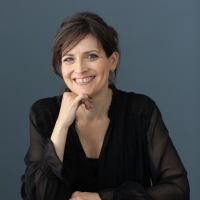
Dr. Ana Revilla is an art historian and curator specializing in new technologies applied to museums and cultural heritage. Founder and director of The Modern Cultural Productions (Zaragoza, Spain), she has led pioneering immersive and audiovisual projects for major institutions, including the Museo Nacional Thyssen-Bornemisza and the IAACC Pablo Serrano. Her research focuses on the integration of virtual and augmented reality, immersive installations, and digital museography aimed at enhancing public engagement and accessibility.
She has participated in prestigious European research projects such as Horizon 2020 “VR-Together”, an awarded and internationally recognized project exploring collaborative virtual reality environments, and PlatVR, dedicated to innovation in immersive storytelling and interactive cultural experiences.
Dr. Revilla holds a PhD in Art History and New Technologies and is a frequent lecturer at international conferences on digital culture, immersive media, and postdigital museology.