Exploring how technology transforms knowledge, culture, and society.
The Technology, Knowledge & Society Research Network investigates how emerging technologies shape knowledge systems, communication, and social organization. Member-based and scholar-led, the Network brings together researchers, educators, and practitioners to examine technology’s role in transforming how we create, share, and apply understanding in a connected world.
Henry Jenkins, Eighth International Conference on Technology, Knowledge and Society, University of California, Los Angeles, USA (2012)
Our Platforms
Our Platforms
Founded in 2005, the Technology, Knowledge & Society Research Network grew from work on multiliteracies and knowledge design that examined how meaning is produced and shared across evolving digital and social environments. In a period marked by rapid technological change, this work highlighted the need to rethink how knowledge is generated, validated, and circulated—across disciplines, institutions, and cultures. The Network was established as a global forum for scholars and practitioners concerned with the human, ethical, and epistemic dimensions of technological innovation, exploring how sociotechnical systems shape everyday life, institutions, and futures.
Annual Conference
The International Conference on Technology, Knowledge & Society is hosted each year with a leading academic partner. Past and forthcoming hosts include the University of California, Berkeley (USA), University of Toronto (Canada), University of Buenos Aires (Argentina), University of Salamanca (Spain), University of Cambridge (UK), Free University, Berlin (Germany), Universitat Politècnica de València (Spain), McGill University (Canada). Each edition develops a Special Focus that reflects critical questions at the intersection of innovation, ethics, and social transformation.
Journal
The International Journal of Technology, Knowledge, and Society publishes peer-reviewed research on the social and cultural dynamics of technological change. Articles examine data ethics, information design, innovation ecologies, and the human impacts of digital systems. Guided by a double-anonymous review process, the Journal emphasizes conceptual clarity, methodological rigor, and real-world relevance.
Book Imprint
The Technology, Knowledge, and Society Book Imprint extends this work through monographs and edited volumes linking design, communication, and governance to knowledge production. Books in the series explore technology’s cultural and institutional dimensions—linking critical reflection with design, governance, and social responsibility.
Online Member Knowledge Community
A digital community, hosted on CGScholar, where Members share profiles, connect with peers, and participate in an integrated system that carries the Technology, Knowledge & Society Research Network forward year-round—supporting ongoing dialogue, showcasing new research, and creating clear pathways for meaningful scholarly engagement across sociotechnical systems, digital culture, innovation, and ethics
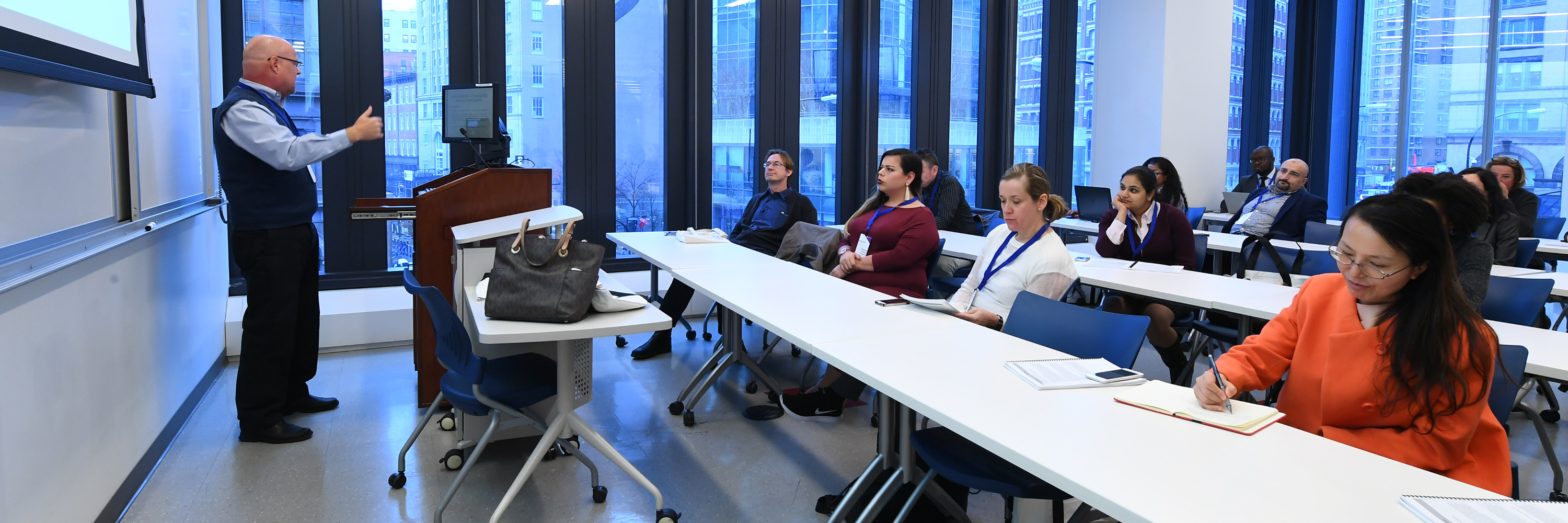
Fourteenth International Conference on Technology, Knowledge & Society, St John's University, Manhattan Campus, New York, USA (2018)
Leadership
The Network is chaired by Professor Marcus Breen (Boston College, USA), whose research explores media, communication, and technology policy. Founding Chairs Bill Cope and Mary Kalantzis (University of Illinois, USA) established the Network’s enduring focus on technology’s relationship to knowledge—how systems of meaning, learning, and innovation evolve through new media and social practice
Partnerships extend the Network’s scholar-led mission—connecting institutions dedicated to responsible innovation and inclusive knowledge systems. Recent partners include
International Institute for the Inclusive Museum (iiiM)
Hyderabad, India & Sydney, Australia
St John's University, School of Education
New York City, USA
ELISAVA Barcelona School of Design and Engineering