2026 In-Person Recipients
For each conference, a small number of Emerging Scholar Awards are given to outstanding graduate students and emerging scholars who have an active research interest in the conference themes. Emerging Scholars perform a critical role in the conference by chairing the parallel sessions, providing technical assistance in the sessions, and presenting their own research papers. The 2026 Emerging Scholar Award Recipients are as follows:

Aysegul Ozlem Bayraktar Sari
Cardiff University, United Kingdom
Aysegul Ozlem Bayraktar Sari is a PhD candidate at the Welsh School of Architecture, Cardiff University. Her research broadly explores architectural design through computational and data-driven methods. She focuses on how emerging technologies such as Building Information Modelling (BIM), graph-based design methods, and machine learning can support spatial analysis, design exploration, and performance evaluation in architectural processes. Aysegul has several years of professional experience as an architect and has published research on spatial analysis and architectural design. She also contributes to civic engagement projects linking architecture, sustainability, and education through interactive activities with primary school children in Cardiff.
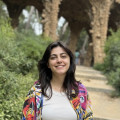
Tuğçe Alp
Middle East Technical University/ Phd. Student at Department of City and Regional Planning, Türkiye
Tuğçe Alp is a PhD candidate in Urban Planning at Middle East Technical University. Her doctoral research examines how water is framed, valued, and positioned within contemporary urban planning paradigms, focusing on the philosophical and ethical assumptions that shape human–water relationships in urban environments. She holds a BA in City and Regional Planning from METU and an MSc in International Architecture and Urban Design from Meiji University in Tokyo, where her work addressed landscape urbanism as a framework for water-resilient cities. Since 2018, she has been involved in design and research projects at the National Botanical Garden of Türkiye, with experience in site planning, planting design, and spatial interpretation through integrated landscape and urban design perspectives.

Emily Chang
Local Parti Architecture and Passive Design, United States
Emily Chang, AIA, LEED AP, CPHC moves through the world as both architect and observer, shaping spaces that quietly recalibrate how people feel in their environments. As founder of Local Parti Architecture and Passive Design, she approaches design as a living system—balancing light, air, and material with human rhythms and emotion. Her work is intimate, precise, and values-driven, rooted in sustainability and a deep respect for what already exists. She is equally drawn to structure and story, translating complex ideas into environments that feel effortless. Curious and exacting, she seeks alignment over performance, creating a life and practice that reflect clarity, intention, and a grounded sense of possibility.

Jorge Javier
Universidad Anáhuac Querétaro, Mexico
Professor and Researcher for Architecture School at Universidad Anáhuac Querétaro. His professional development has revolved around three main aspects: design, consultancy and education in architecture, sharing the need of improvement by designing housings, diverse commercial buildings, and ephemeral modular structures alongside urban proposals.
He has participated in conferences in Mexico, Spain and other countries on sustainability and architectural heritage in urban environments. He is a member of the ACSA review committee and writes about cities in various international media outlets. He is also a member of the Citizen Council for Urban Planning of the Municipality of Querétaro

Gigi Polo
The New School University, United States of America
Dominican-born designer, educator, filmmaker, and practice-based PhD candidate at RMIT University. Her research, Osmotic Sensoria, explores how spatial design and embodied cognition can create neuroinclusive, multisensory learning environments. She integrates speculative design to reimagine equitable educational spaces. Gigi has taught at many design schools and currently teaches at Parsons School of Design, where she has worked for the past 20 years, and at Chavón School of Design (DR). She is the author of Second Language Through Design[ing] (2017) and creator of the Sprint-to-Pacing model for intensive learning, which is implemented in the Chavón Foundations curriculum. Her scholarly work spans publications and presentations at CGScholar, Bloomsbury Encyclopedia of Design Studies, Spark Journal (UAL), ICDPCA, APA, FATE, MozFest, and more. She serves on the editorial board of CGScholar and as Vice President of Communications and Branding for Foundations in Art: Theory and Education (FATE). As a filmmaker, she directed Madly Gifted (2013), a documentary on bipolar disorder and creative temperament, which was integrated into the University of Texas Medical Branch (UTMB) Psychiatry Clerkship Curriculum for medical education. In her design practice, Gigi leads Gigi Polo Lab, collaborating with mission-driven organizations on inclusive, wellness-oriented, and future-facing design. Her work advances models for equitable, immersive, and neurodiverse learning environments.

Andrea Mirón Ramírez
Universidad de Navarra, Spain
Andrea Mirón Ramírez holds a BA in Philosophy from the Benemérita Universidad Autónoma de Puebla, México and is currently pursuing an MA in Curatorial Studies at the University of Navarra. Her research is situated at the intersection of decolonial theory, aesthetics, and phenomenology, with a focus on spatial practices and the production of place within contemporary art and architecture. Her work examines space as a critical dispositif, attending to how exhibitions and architectural environments shape perception, subjectivity, and cultural narratives. She is particularly interested in curatorial and spatial strategies that challenge hegemonic epistemologies and foreground situated, embodied, and plural experiences of place. Her practice integrates research, curating, and cultural management, with an emphasis on accessibility, critical pedagogy, and socially engaged projects that activate space as a site of reflection and transformation.